
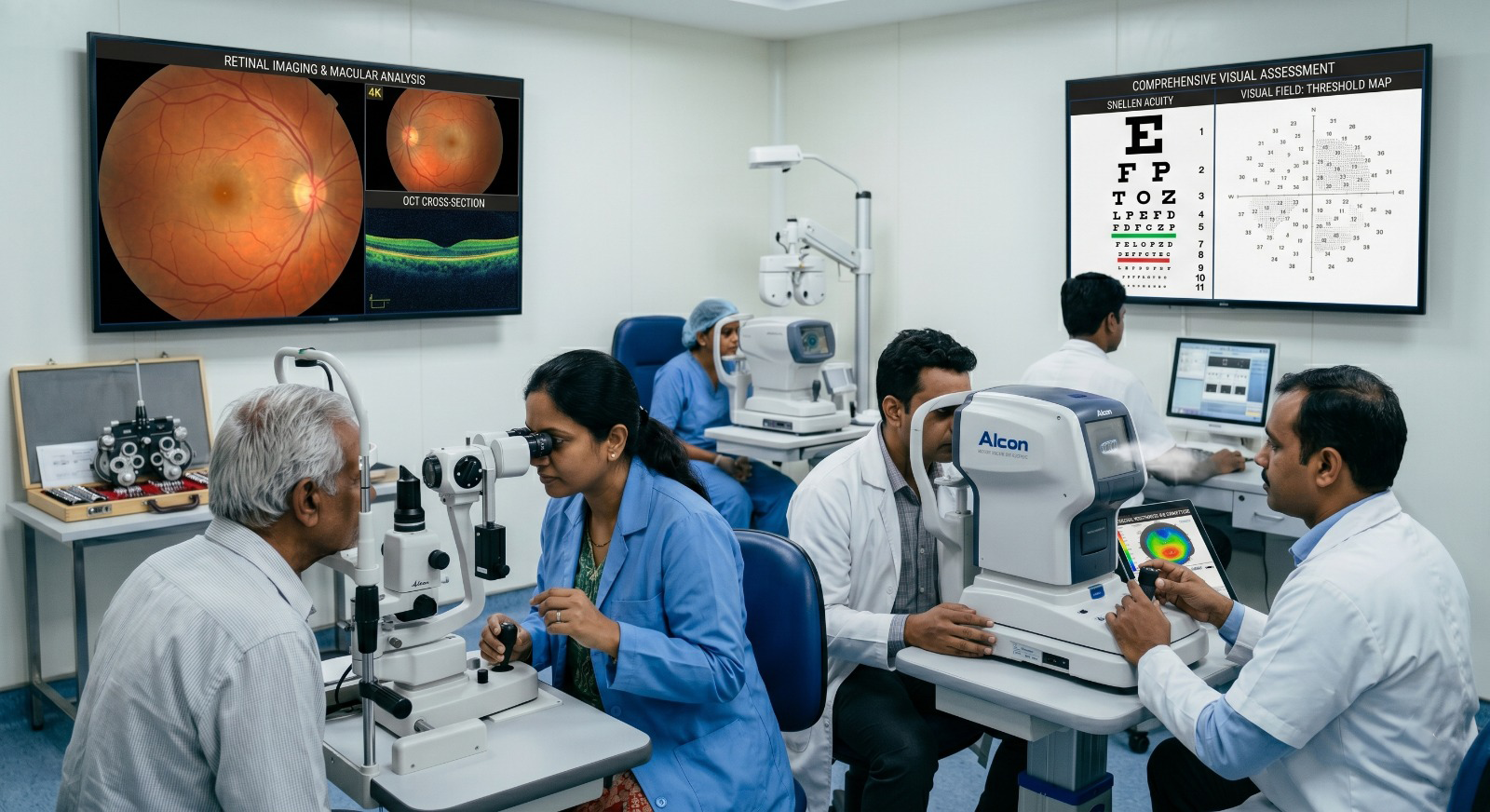
What is a Complete Eye Examination?
A complete eye examination is a detailed evaluation of your eye health and vision, not just a check for glasses. It looks at how well each eye sees, how the two eyes work together, the internal structures of the eye (retina, optic nerve, cornea, lens), and the eye pressure — since several serious eye conditions develop silently, without early symptoms.
Why is Eye Examination Important?
Regular eye check-ups help in early detection of eye diseases like glaucoma, cataract, diabetic retinopathy, and refractive errors, often before a person notices any change in vision. Conditions such as glaucoma can quietly damage the optic nerve for years, and by the time vision loss is noticed, some of that damage may not be reversible. Early diagnosis makes treatment simpler, less invasive, and far more effective at protecting long-term vision.
What Does the Examination Include?
- Vision testing (near and distance)
- Eye pressure (glaucoma screening)
- Retina and optic nerve examination
- Refraction test for glasses power
- Computer vision and dry eye evaluation
- Diabetic eye screening
Depending on the findings, the doctor may recommend additional tests such as corneal topography, OCT (optical coherence tomography) imaging of the retina and optic nerve, or a dilated fundus examination for a more detailed view of the back of the eye.
What to Expect During Your Visit
Most of the tests are quick and painless. Some tests, such as a dilated eye exam, use eye drops that temporarily widen the pupil for a clearer view of the retina — this can cause mild light sensitivity and blurred near vision for a few hours, so it is a good idea to bring sunglasses and, if possible, arrange for someone to accompany you or plan not to drive immediately afterward.
Who Should Get Eye Check-up?
Everyone should get their eyes checked regularly, especially people with diabetes, high blood pressure, a family history of glaucoma, prolonged screen use, or those experiencing vision problems such as blurring, headaches, or difficulty seeing at night.
How Often Should You Get Tested?
Adults with no known eye problems should have an eye examination every 1-2 years. Children, elderly individuals, and people with diabetes or a family history of eye disease may need more frequent check-ups, as advised by the doctor after the first evaluation.