
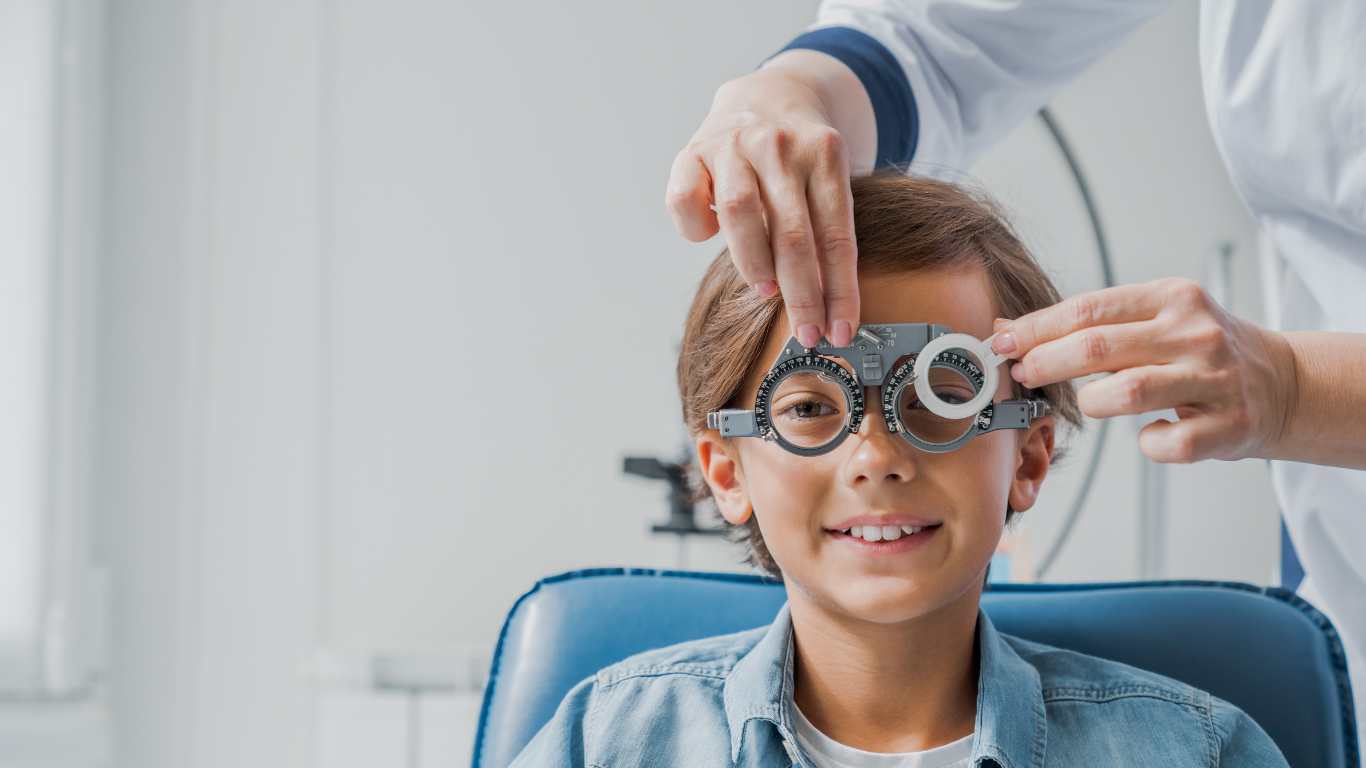
What is Child Eye Care?
Child eye care, also known as pediatric ophthalmology, focuses on diagnosing and treating eye problems in infants, children, and teenagers. Early detection is very important because a child's visual system is still developing, and untreated eye problems in early childhood can affect not just eyesight but also learning, reading ability, and overall development.
Common Eye Problems in Children
- Refractive errors (need for glasses)
- Squint (misalignment of eyes)
- Amblyopia (lazy eye)
- Congenital cataract
- Blocked tear duct
- Digital eye strain
Why Early Eye Check-up is Important?
Children may not always complain about vision problems, since they often assume that whatever they see is normal — they have nothing to compare it to. Regular eye check-ups help detect issues early, while treatment is most effective. This is especially true for conditions like amblyopia (lazy eye), where the visual system needs to be corrected during childhood; treatment becomes far less effective once the child is older.
Signs Your Child Needs Eye Check-up
If your child is rubbing eyes frequently, sitting too close to screens or the television, tilting the head or covering one eye to see better, squinting, or facing difficulty in reading or following along in class, it is important to consult an eye specialist. Teachers often notice these signs before parents do, so feedback from school is also worth paying attention to.
Recommended Eye Check-up Schedule
Pediatricians commonly suggest a first vision screening in infancy, another around preschool age (3-4 years) to catch squint or lazy eye before school starts, and regular screenings through the school years, since a child's eyesight can change quickly during growth.
Our Approach
We provide child-friendly eye examinations using gentle, age-appropriate methods to ensure the child stays comfortable while the doctor gets an accurate diagnosis. Parents are involved throughout the visit and treatment is explained in simple terms before any glasses, patching, or further evaluation is recommended.