
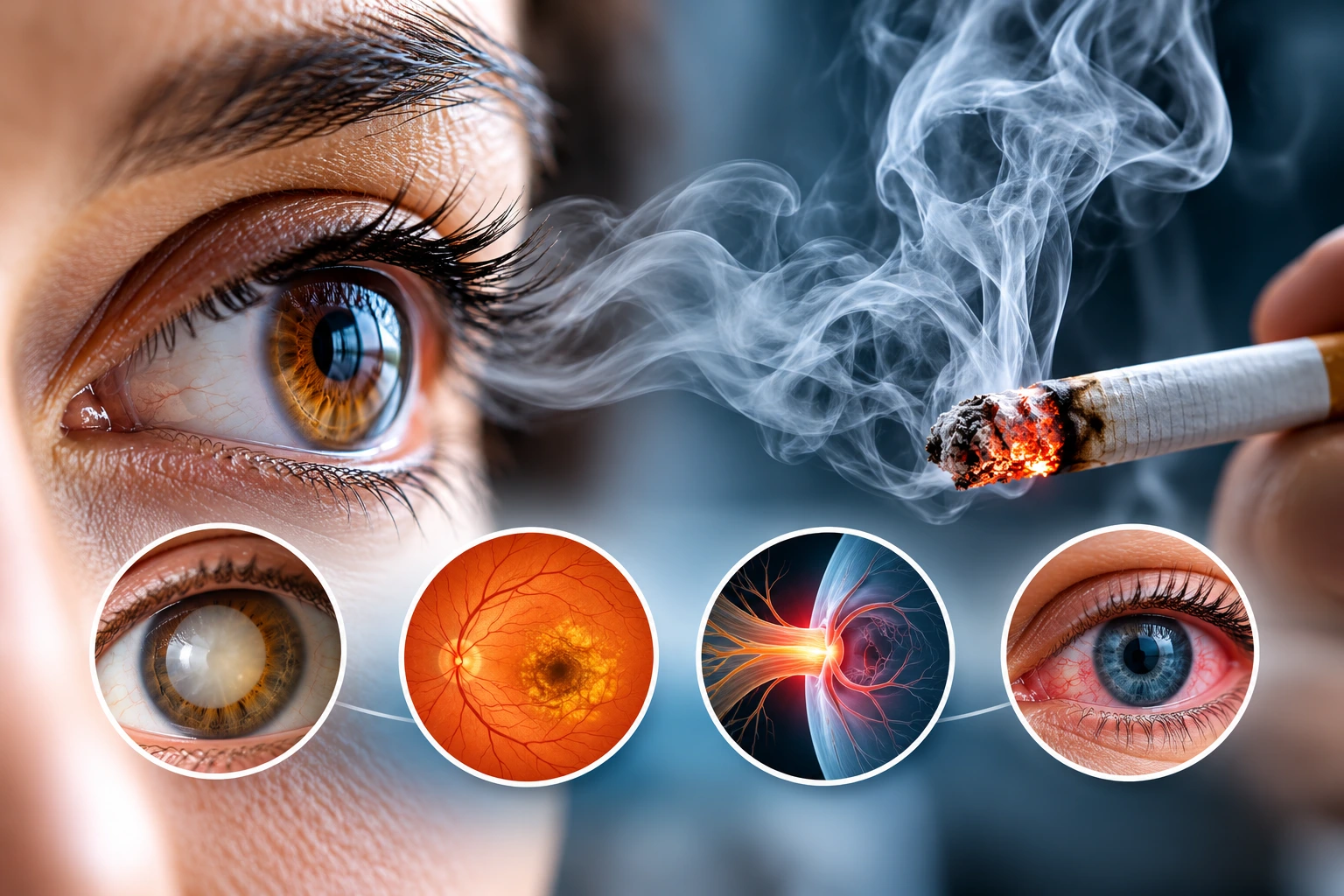
Smoking and Your Eyes: Hidden Risks That Can Damage Your Vision
When people think about the harmful effects of smoking, they often associate it with lung cancer, heart disease, and respiratory problems. However, one important health risk that frequently goes unnoticed is the impact of smoking on eye health.
Cigarette smoke contains harmful chemicals that can affect different parts of the eye, including the lens, retina, and optic nerve. Over time, smoking can increase the risk of serious eye conditions that may lead to permanent vision impairment.
Understanding the connection between smoking and eyesight is an important step toward protecting long-term vision.
How Does Smoking Affect Your Eyes?
Every cigarette exposes the body to nicotine, carbon monoxide, and numerous toxic substances. These chemicals contribute to oxidative stress, inflammation, and blood vessel damage.
The eyes contain delicate structures that depend on healthy circulation and normal cellular function. Smoking can interfere with these processes and increase the likelihood of developing certain eye diseases.
Research has linked cigarette smoking with several eye-related conditions, including:
Cataracts
Age-related macular degeneration (AMD)
Optic nerve damage
Dry eye symptoms
Increased risk of diabetic eye complications
Some smoking-related eye conditions develop gradually without noticeable symptoms during their early stages. This makes regular eye examinations particularly important.
1. Smoking Increases the Risk of Cataracts
A cataract occurs when the normally clear natural lens of the eye becomes cloudy, causing vision to appear blurry or hazy.
Smoking is a recognized risk factor for cataract development. Harmful substances associated with smoking can contribute to oxidative damage in the eye's lens.
According to the Centers for Disease Control and Prevention (CDC), people who smoke are approximately two to three times more likely to develop cataracts than people who do not smoke.
Common Symptoms of Cataracts
Blurred or cloudy vision
Increased sensitivity to bright light
Difficulty seeing clearly at night
Glare or halos around lights
Colors appearing faded or yellowish
Frequent changes in spectacle prescriptions
Cataracts usually progress gradually. When they significantly interfere with everyday activities, cataract surgery may be recommended after a comprehensive eye examination.
Quitting smoking is an important preventive measure, although it cannot reverse an existing cataract.
2. Smoking and Age-Related Macular Degeneration
Age-related macular degeneration, commonly known as AMD, affects the macula, the central part of the retina responsible for sharp and detailed vision.
The macula plays a crucial role in activities such as reading, recognizing faces, and driving.
Smoking is one of the major modifiable risk factors for AMD.
Research summarized by the CDC indicates that smokers have approximately twice the risk of developing age-related macular degeneration compared with non-smokers.
Warning Signs of Macular Degeneration
Blurred central vision
Straight lines appearing wavy or distorted
Difficulty recognizing faces
Trouble reading small text
Dark or unclear spots in the center of vision
Increased need for brighter lighting
Early AMD may not cause noticeable symptoms. Therefore, individuals with risk factors should discuss appropriate retinal examinations with an eye specialist.
Some forms of advanced AMD can cause irreversible central vision loss, making early detection particularly important.
3. Can Smoking Damage the Optic Nerve?
The optic nerve carries visual information from the eye to the brain.
Damage to this nerve can affect vision and may lead to permanent visual impairment.
Smoking has been associated with optic nerve damage and is considered an important concern for overall eye health.
Conditions such as glaucoma can also damage the optic nerve, often without obvious symptoms in their early stages.
However, smoking does not automatically mean a person will develop glaucoma. Several factors, including age, family history, and intraocular pressure, influence glaucoma risk.
A comprehensive eye examination can help identify optic nerve abnormalities and determine whether further testing is necessary.
4. Smoking Can Worsen Dry Eye Symptoms
Dry eye disease occurs when the eyes do not produce enough tears or when the tear film does not function properly.
Exposure to cigarette smoke can irritate the surface of the eyes and worsen existing dry eye symptoms.
Common Symptoms of Dry Eyes
Burning or stinging sensation
Eye redness
Gritty or sandy feeling
Frequent watering
Temporary blurred vision
Eye discomfort
Interestingly, excessive watering can sometimes occur in people with dry eye disease because irritation triggers reflex tear production.
Avoiding cigarette smoke and seeking appropriate treatment can help improve comfort and reduce irritation.
5. Smoking and Diabetic Eye Disease
Diabetes can damage the small blood vessels in the retina, leading to a condition called diabetic retinopathy.
Smoking adds to the overall vascular and cardiovascular risks associated with diabetes.
Individuals who have diabetes and smoke should be particularly careful about maintaining healthy blood sugar levels, blood pressure, and cholesterol.
Regular dilated retinal examinations are important because diabetic eye disease can develop before noticeable vision problems occur.
Smoking cessation, diabetes management, and timely ophthalmic examinations are important components of long-term eye care.
6. Can Secondhand Smoke Affect Eye Health?
Secondhand smoke refers to tobacco smoke inhaled by people who are near someone who is smoking.
Even individuals who do not smoke may experience eye irritation when exposed to cigarette smoke.
Possible symptoms include:
Redness
Burning sensation
Excessive watering
Eye discomfort
Worsening of existing dry eye symptoms
Avoiding smoke-filled environments can help reduce eye irritation and protect overall health.
7. What Are the Early Signs of Smoking-Related Eye Problems?
Smoking-related eye diseases do not always cause immediate symptoms.
However, certain changes in vision should never be ignored.
Important Warning Signs
Persistent blurred vision
Difficulty seeing at night
Increased sensitivity to glare
Distorted or wavy lines
Reduced central vision
Persistent redness or discomfort
Difficulty reading or recognizing faces
These symptoms can have several possible causes and do not necessarily indicate smoking-related disease.
A comprehensive eye examination is necessary to identify the underlying condition.
Important: Sudden vision loss, a sudden dark curtain over vision, or a sudden change in eyesight requires urgent medical evaluation.
8. Does Quitting Smoking Help Protect Your Vision?
Yes. Quitting smoking is one of the most important lifestyle changes a person can make to reduce the risk of smoking-related eye diseases.
Although stopping smoking cannot reverse every form of existing eye damage, it may reduce the likelihood of developing certain conditions and help protect long-term eye health.
Benefits of Quitting Smoking
Lower risk of developing smoking-related eye disease over time
Reduced exposure to harmful tobacco chemicals
Better overall cardiovascular health
Reduced exposure to smoke-related eye irritation
Long-term benefits for general health
People who have smoked for many years can still benefit from quitting.
Anyone finding it difficult to stop smoking can seek support from an appropriate healthcare professional or smoking cessation service.
9. How Can You Protect Your Eyes from Smoking-Related Damage?
Healthy lifestyle choices and preventive eye care can help protect vision.
Stop Smoking
Avoiding tobacco is the most important step toward reducing smoking-related eye risks.
Schedule Regular Eye Examinations
Comprehensive eye examinations help identify conditions such as cataracts, glaucoma, retinal abnormalities, and macular degeneration.
The recommended frequency depends on age, medical history, and individual risk factors.
Eat a Balanced Diet
Include leafy green vegetables, fruits, nuts, and other nutritious foods as part of a balanced diet.
Manage Blood Pressure and Diabetes
Maintaining healthy blood pressure, blood sugar, and cholesterol levels supports overall vascular and eye health.
Protect Your Eyes from UV Radiation
Wear sunglasses offering appropriate UVA and UVB protection when outdoors.
Avoid Secondhand Smoke
Reducing exposure to tobacco smoke can help prevent unnecessary eye irritation.
10. When Should You Consult an Eye Specialist?
An eye examination is recommended when you experience persistent or unexplained visual symptoms.
You should consider consulting an ophthalmologist if you:
Have a history of long-term smoking
Notice persistent changes in vision
Experience difficulty reading or driving
Have diabetes or high blood pressure
Have a family history of retinal disease or glaucoma
Experience ongoing eye irritation or discomfort
An eye specialist may recommend vision testing, slit-lamp examination, dilated retinal examination, intraocular pressure measurement, or additional investigations depending on clinical findings.
Eye Health Awareness at Umaprem Netralaya, Varanasi
Protecting your vision involves understanding risk factors, recognizing warning signs, and obtaining appropriate medical advice.
At Umaprem Netralaya, Varanasi, patients can seek ophthalmic consultation and information about eye examinations and available eye care services.
Individuals concerned about smoking-related vision changes should consult a qualified eye specialist for assessment and guidance based on their individual condition.
3. Frequently Asked Questions (FAQs)
ये प्रश्न ब्लॉग के अंत में FAQ section और FAQ Schema के लिए उपयोग किए जा सकते हैं।
Q1. Can smoking cause permanent vision loss?
Yes. Smoking increases the risk of diseases such as age-related macular degeneration, which can result in permanent central vision loss. Not everyone who smokes develops vision loss.
Q2. Does smoking increase the risk of cataracts?
Yes. Smoking is an established risk factor for cataract formation. Research indicates smokers have a substantially higher risk compared with non-smokers.
Q3. Can smoking cause dry eyes?
Cigarette smoke can irritate the eye surface and worsen dry eye symptoms such as burning, redness, and discomfort.
Q4. Can eyesight improve after quitting smoking?
Quitting smoking can reduce future eye health risks, but existing structural damage caused by certain eye diseases may not be reversible.
Q5. How does smoking affect the retina?
Smoking is associated with oxidative stress and vascular damage and increases the risk of age-related macular degeneration, which affects central vision.
Q6. Should smokers get regular eye examinations?
Yes. People who smoke should discuss their eye health risks with an ophthalmologist. The examination schedule should be based on their age, symptoms, and medical history.
Q7. Where can I get an eye examination in Varanasi?
Individuals in Varanasi can consult an ophthalmologist at Umaprem Netralaya for guidance regarding eye health concerns and appropriate examinations.
Conclusion
Smoking can affect much more than the lungs and heart. It is associated with an increased risk of cataracts, age-related macular degeneration, and other eye health concerns that may contribute to vision impairment.
Some eye diseases progress silently, making preventive eye examinations especially important.
Quitting smoking, maintaining a healthy lifestyle, and seeking timely medical attention can help reduce avoidable eye health risks.
Your Eyes Deserve a Smoke-Free Future.
Medical Disclaimer: This article is intended for general health education only. It is not a substitute for professional medical advice, diagnosis, or treatment. Consult a qualified ophthalmologist for any vision-related concerns.