
Retinal Detachment: Signs, Symptoms, Causes and When to Seek Emergency Eye Care
Retinal detachment is a serious eye condition in which the retina separates from the tissues that normally support it. The retina is the light-sensitive layer at the back of the eye that helps convert light into signals the brain interprets as vision.
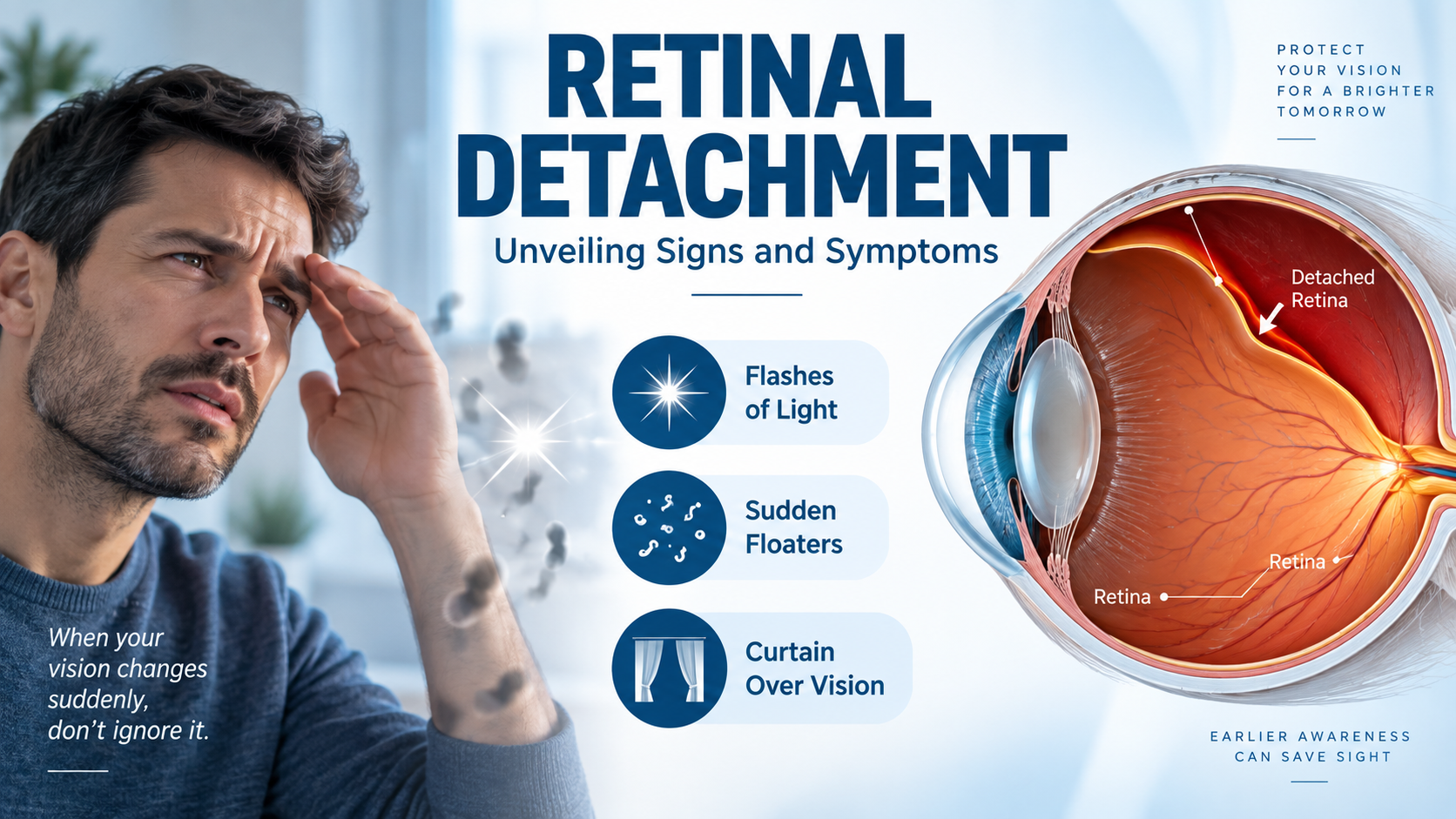
A retinal detachment can threaten eyesight if treatment is delayed. The important thing to know is that it may begin with warning symptoms such as sudden flashes of light, a rapid increase in floaters, blurred vision, or a dark curtain-like shadow moving across the field of vision.
Recognizing these symptoms early and seeking urgent ophthalmic care can make an important difference in protecting vision.
What Is Retinal Detachment?
The retina is a thin layer of light-sensitive tissue located at the back of the eye. It plays a vital role in clear vision.
In retinal detachment, part of the retina becomes separated from the underlying tissue that provides it with oxygen and nutrients. If the retina remains detached for too long, retinal cells may become damaged and permanent vision loss can occur.
Retinal detachment is generally considered an eye emergency and requires prompt evaluation by an ophthalmologist.
What Are the Early Signs of Retinal Detachment?
Retinal detachment is usually painless. This is one reason people may initially ignore its symptoms.
Common warning signs include:
1. Sudden Increase in Eye Floaters
Floaters may look like:
- Small black dots
- Specks
- Cobwebs
- Threads
- Rings or spots moving across vision
Some people normally have a few floaters. However, a sudden appearance of many new floaters can be a warning sign of a retinal tear or retinal detachment.
2. Flashes of Light
A person may suddenly notice flashes of light, especially toward the side of the vision.
These flashes may appear like:
- Camera flashes
- Lightning streaks
- Flickering lights
- Brief sparks
Flashes can occur when the vitreous gel inside the eye pulls on the retina.
New or sudden flashes should be evaluated by an eye specialist.
3. A Dark Curtain or Shadow in Vision
One of the most concerning symptoms of retinal detachment is the appearance of a:
Curtain, veil, shadow or dark area moving across the vision.
It may start from one side and gradually spread across the visual field.
This symptom requires urgent ophthalmic evaluation.
4. Loss of Peripheral Vision
Peripheral vision is the ability to see objects toward the sides while looking straight ahead.
Retinal detachment may gradually cause side vision to become reduced.
Some patients describe it as if part of their vision has suddenly disappeared.
5. Sudden Blurred Vision
Vision may suddenly become:
- Blurry
- Distorted
- Hazy
- Less sharp
If blurred vision develops suddenly along with flashes or floaters, it should not be ignored.
6. Sudden Reduction in Vision
If the retinal detachment progresses toward the central retina, vision can become significantly impaired.
A sudden decrease in eyesight should always be treated seriously.
Does Retinal Detachment Cause Pain?
Usually, retinal detachment does not cause pain.
A person may have significant retinal damage without experiencing redness or pain.
This is why symptoms such as flashes, floaters and visual shadows are particularly important warning signs.
What Causes Retinal Detachment?
Retinal detachment can occur for several reasons.
Retinal Tear or Hole
The most common type begins when a tear or break develops in the retina.
Fluid from inside the eye may pass through the tear and collect underneath the retina, causing it to separate.
Age-Related Changes in the Vitreous
The inside of the eye contains a gel-like substance called the vitreous.
As people age, the vitreous can shrink and separate from the retina. This is called posterior vitreous detachment.
In some people, this process can pull strongly enough on the retina to create a tear.
Severe Nearsightedness
People with high myopia or severe short-sightedness may have a thinner retina and a higher risk of retinal tears and detachment.
Eye Injury
A strong blow or trauma to the eye may damage the retina.
Retinal problems can sometimes develop immediately after an injury or even later.
Previous Eye Surgery
People who have undergone certain eye surgeries, including cataract surgery, may have an increased risk of retinal detachment.
This does not mean retinal detachment will occur after surgery, but people with additional risk factors may require closer retinal monitoring.
Who Is at Higher Risk of Retinal Detachment?
The risk can be higher in people who have:
- High myopia
- Previous retinal tear or detachment
- Retinal detachment in the other eye
- Family history of retinal detachment
- Previous eye trauma
- Certain retinal disorders
- Previous eye surgery
- Age-related changes in the vitreous
People with these risk factors should take sudden visual symptoms seriously.
What Is the Difference Between Normal Floaters and Dangerous Floaters?
A few long-standing floaters may be harmless.
The concern is when floaters:
- Suddenly increase in number
- Appear for the first time
- Occur together with flashes
- Are accompanied by blurred vision
- Appear with a curtain or shadow in vision
A sudden shower of small dark spots may also require urgent assessment.
Only a detailed retinal examination can determine whether a retinal tear or detachment is present.
Can Retinal Detachment Affect One or Both Eyes?
Retinal detachment commonly occurs in one eye.
However, a person who has experienced a retinal tear or detachment in one eye may have a higher risk of retinal problems in the other eye.
Regular retinal check-ups may therefore be recommended.
How Is Retinal Detachment Diagnosed?
An ophthalmologist may perform a detailed dilated retinal examination.
Depending on the situation, evaluation may include:
- Dilated fundus examination
- Retinal imaging
- Optical coherence tomography in selected cases
- Ocular ultrasound when the retina cannot be seen clearly
The purpose is to determine whether there is a retinal tear, retinal hole or retinal detachment and how much of the retina is involved.
How Is Retinal Detachment Treated?
Treatment depends on whether the patient has a retinal tear or an established retinal detachment.
Laser Treatment
If a retinal tear is detected before significant detachment occurs, laser treatment may sometimes be used to seal the retina around the tear.
Cryotherapy
Cryotherapy uses controlled freezing to create a scar around a retinal tear and help secure the retina.
Retinal Surgery
If the retina has already detached, surgery may be required.
Depending on the type and severity of detachment, procedures may include:
- Vitrectomy
- Scleral buckle surgery
- Pneumatic retinopexy
The ophthalmologist will determine the most appropriate treatment based on the retinal condition.
Can Retinal Detachment Cause Permanent Vision Loss?
Yes.
If retinal detachment is left untreated, it can lead to permanent loss of vision.
The visual outcome depends on several factors, including:
- Location of the detachment
- Duration of detachment
- Whether the central retina is involved
- Severity of retinal damage
- How quickly treatment is received
Early diagnosis generally gives doctors a better opportunity to protect vision.
When Should You See an Eye Doctor Immediately?
Seek urgent eye care if you suddenly develop:
- Many new floaters
- Flashes of light
- A dark curtain or shadow in vision
- Sudden loss of peripheral vision
- Rapidly worsening blurred vision
- Sudden loss of eyesight
These symptoms should not be delayed until a routine appointment.
Can Retinal Detachment Be Prevented?
Not every retinal detachment can be prevented.
However, early detection of retinal tears can sometimes reduce the risk of progression.
People at higher risk may benefit from regular dilated retinal examinations.
You should also protect your eyes during activities that may cause eye injuries and seek medical attention after significant eye trauma.
Can Screen Time Cause Retinal Detachment?
Routine use of smartphones, computers or television screens is not considered a direct cause of retinal detachment.
However, screen use may cause other problems such as digital eye strain, dryness or headaches.
Retinal detachment is more closely associated with retinal tears, age-related vitreous changes, severe myopia, trauma and certain eye conditions.
Frequently Asked Questions About Retinal Detachment
Is retinal detachment painful?
Usually not. Retinal detachment often develops without pain, making visual warning signs especially important.
Are flashes and floaters always retinal detachment?
No. Flashes and floaters can occur for several reasons. However, sudden new symptoms should be evaluated because they may indicate a retinal tear.
Can retinal detachment heal on its own?
A retinal detachment generally requires medical or surgical treatment. Waiting for it to resolve on its own can put vision at risk.
How quickly should I see a doctor?
Sudden flashes, many new floaters, a curtain-like shadow or sudden vision loss should be treated as urgent symptoms and evaluated promptly.
Can retinal detachment happen again after treatment?
Recurrence can occur in some patients. Follow-up examinations are therefore important after treatment.
Conclusion
Retinal detachment is a serious but potentially treatable eye condition when diagnosed promptly.
The most important symptoms to remember are:
Sudden floaters + flashes of light + a curtain or shadow in vision = urgent eye examination.
Do not wait for pain, redness or complete vision loss before consulting an ophthalmologist.
If you notice sudden changes in your vision, especially flashes, new floaters or a dark shadow across your sight, seek professional eye care immediately.