
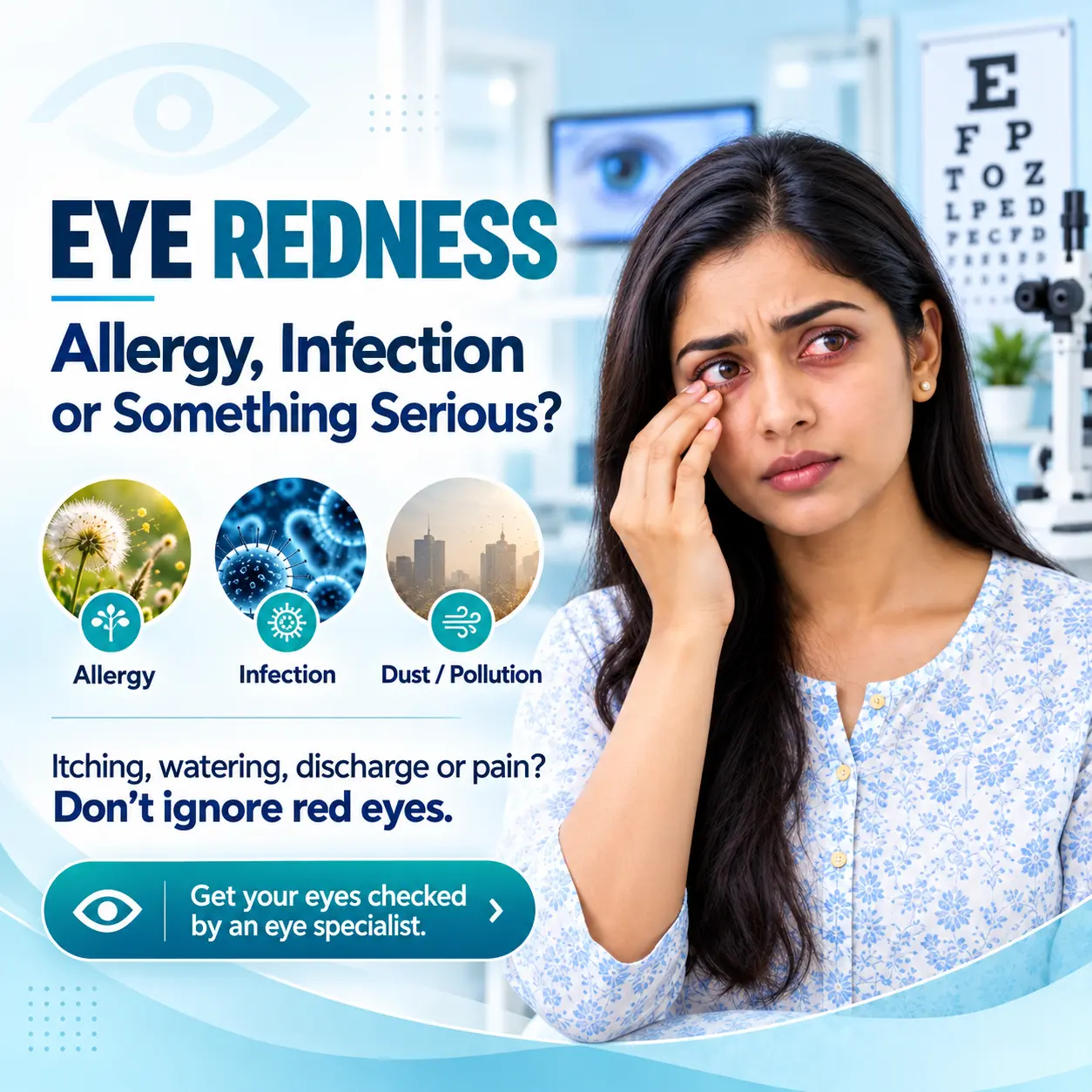
Eye Redness: Allergy, Infection or Something Serious?
Red eyes are very common. Sometimes they appear after a long day in front of a screen, exposure to dust, lack of sleep, or a mild allergy. In many cases, the redness settles on its own. But sometimes, a red eye can be a sign of an infection or another eye condition that needs medical attention.
The important question is not just, “Why are my eyes red?” but also, “What other symptoms are happening along with the redness?”
Understanding those signs can help you know when simple care may be enough and when you should visit an eye doctor.
What Causes Eye Redness?
The white part of the eye contains tiny blood vessels. When these vessels become irritated or inflamed, they can widen and become more visible, making the eye look red.
Eye redness may happen in one eye or both eyes. It can also be accompanied by itching, watering, burning, discharge, pain, blurred vision, or sensitivity to light.
Some causes are mild, while others require timely examination.
1. Eye Allergy
Allergy is one of the most common reasons for red and itchy eyes.
Dust, pollen, pollution, pet dander, cosmetics, smoke, or seasonal changes may trigger an allergic reaction.
Common symptoms of eye allergy include:
Redness in both eyes
Intense itching
Excessive watering
Mild swelling around the eyes
Burning or irritation
Frequent rubbing of the eyes
A useful clue is that itching is usually more prominent in allergy.
People with allergic eye problems may also have sneezing, a runny nose, or nasal allergy symptoms.
What should you do?
Avoid rubbing your eyes, as rubbing can make irritation worse. Washing the face and eyelids gently and avoiding known triggers may help.
If symptoms occur frequently or do not improve, an eye examination is advisable.
2. Eye Infection
Eye infections can also cause redness. One common example is conjunctivitis, often called “pink eye.”
Infections may be caused by viruses or bacteria, and the symptoms can vary.
Possible signs of an eye infection include:
Redness
Sticky or thick discharge
Eyelids sticking together after sleep
Watering
Burning sensation
Gritty or foreign-body feeling
Swelling of the eyelids
Viral conjunctivitis may cause more watery discharge, while bacterial infection may sometimes produce thicker discharge.
Because different types of conjunctivitis may look similar, it is better not to use antibiotic eye drops without medical advice.
3. Dry Eyes
It may sound surprising, but dry eyes can also make the eyes red.
When the eye does not produce enough tears, or when tears evaporate too quickly, the surface of the eye becomes irritated.
Common dry-eye symptoms include:
Burning
Grittiness
Redness
Tired eyes
Blurry vision that comes and goes
Excessive watering
Discomfort after prolonged screen use
People who spend long hours on mobile phones, laptops, or computers may blink less often, which can worsen dryness.
4. Excessive Screen Time and Eye Strain
Long periods of screen use do not usually cause a serious eye infection, but they can contribute to eye strain and dryness.
You may notice:
Mild redness
Heavy or tired eyes
Burning
Headache
Temporary blurred vision
Difficulty focusing
Regular breaks, proper lighting, correct screen distance, and frequent blinking can help reduce strain.
5. Contact Lens-Related Problems
Contact lens users should take eye redness seriously, especially if there is pain, blurred vision, or light sensitivity.
Sleeping in contact lenses, wearing them for too long, poor hygiene, or using contaminated lens solution may increase the risk of corneal infection.
If you use contact lenses and develop sudden redness with pain or reduced vision, remove the lenses and seek an eye examination promptly.
6. Foreign Body or Eye Injury
Dust, sand, metal particles, chemicals, or even a small scratch can cause significant redness.
Symptoms may include:
Sudden irritation
Watering
Pain
Difficulty opening the eye
Foreign-body sensation
Light sensitivity
Do not repeatedly rub the eye if you feel something is stuck inside.
If a chemical enters the eye, rinse the eye immediately with plenty of clean water and seek urgent medical care.
7. Subconjunctival Hemorrhage
Sometimes a bright red patch suddenly appears on the white part of the eye.
This can look alarming, but it may be a subconjunctival hemorrhage, where a tiny blood vessel breaks under the surface of the eye.
It can happen after:
Coughing
Sneezing
Straining
Minor trauma
Rubbing the eye
It is often painless and may not affect vision.
However, if it occurs repeatedly, follows an injury, or is accompanied by other symptoms, an eye examination is recommended.
When Can Eye Redness Be Serious?
Not every red eye is dangerous, but certain symptoms should not be ignored.
Seek prompt eye care if redness is accompanied by:
Severe eye pain
Sudden blurred or reduced vision
Strong sensitivity to light
Eye injury
Chemical exposure
Severe headache with eye pain
Nausea or vomiting along with eye pain
Significant swelling
Persistent discharge
Redness after contact lens use
Symptoms that are getting worse instead of better
These symptoms may indicate a condition affecting the cornea, internal structures of the eye, or eye pressure.
Should You Use Over-the-Counter Eye Drops?
Many people use eye drops directly from a pharmacy whenever their eyes become red.
This may not always be a good idea.
Different conditions need different treatments. A drop suitable for allergy may not treat infection, and certain steroid-containing eye drops can be harmful if used without proper examination.
The safest approach is to identify the actual cause before starting medication, especially if symptoms are persistent or severe.
How Can You Prevent Eye Redness?
Simple daily habits can reduce eye irritation:
Avoid rubbing your eyes
Wash your hands before touching your eyes
Do not share towels or eye cosmetics
Take regular breaks during screen use
Blink frequently while using digital devices
Keep contact lenses clean
Never use expired eye drops
Protect your eyes from dust and pollution
Remove eye makeup properly before sleeping
Get regular eye check-ups if you have recurring symptoms
When Should You Visit an Eye Doctor?
You should consider an eye examination if eye redness lasts for more than a short period, keeps returning, or is accompanied by pain, discharge, blurred vision, or sensitivity to light.
A proper eye examination can help distinguish between allergy, dryness, infection, corneal problems, and other causes.
Eye Redness Treatment in Varanasi
If you are experiencing persistent red eyes, irritation, discharge, itching, eye pain, or changes in vision, an ophthalmologist can evaluate the underlying cause and recommend appropriate treatment.
At Umaprem Netralaya, Varanasi, patients can undergo a detailed eye examination for common and complex eye conditions, including allergy, eye infection, dry eye, cataract, glaucoma, corneal problems, and other vision-related concerns.
Treatment depends on the actual diagnosis, so early evaluation can help prevent unnecessary self-medication and ensure the right care for your eyes.
Frequently Asked Questions
Is eye redness always an infection?
No. Eye redness can be caused by allergy, dryness, tiredness, screen strain, contact lenses, injury, or infection.
How can I tell if red eyes are caused by allergy?
Allergic eye redness is commonly associated with itching, watering, and symptoms affecting both eyes.
Can conjunctivitis spread from one person to another?
Some forms of conjunctivitis, particularly viral and bacterial types, may spread through direct contact, contaminated hands, towels, or surfaces.
Can I use antibiotic eye drops for red eyes?
Antibiotics are only useful for certain bacterial infections. They should not be used routinely without an eye doctor's advice.
Is sudden eye redness dangerous?
Sometimes it is harmless, but sudden redness accompanied by pain, blurred vision, light sensitivity, or injury requires prompt medical evaluation.
Can too much screen time make my eyes red?
Yes. Long screen sessions may reduce blinking and contribute to dry eyes, eye strain, burning, and redness.
When should I see an eye specialist?
See an eye specialist if the redness is persistent, painful, worsening, associated with discharge, reduced vision, strong light sensitivity, or contact lens use.
Conclusion
Eye redness is often caused by simple problems such as allergy, dryness, or irritation, but it should not always be ignored.
Instead of treating every red eye with the same eye drops, pay attention to the accompanying symptoms. Pain, vision changes, light sensitivity, severe discharge, or persistent redness are important reasons to seek professional eye care.
An early and accurate diagnosis can help ensure that your eyes receive the treatment they actually need.