
What is Cataract?
Cataract is the clouding of the natural lens of the eye, which causes blurred vision, glare, difficulty in night vision and reduced clarity. It commonly occurs with age but can also develop due to diabetes, prolonged steroid use, eye injury or other eye conditions. Cataracts usually develop gradually, so many people adjust to the slow change without realising how much clarity they have lost until it is evaluated.
What is Advanced Cataract Surgery?
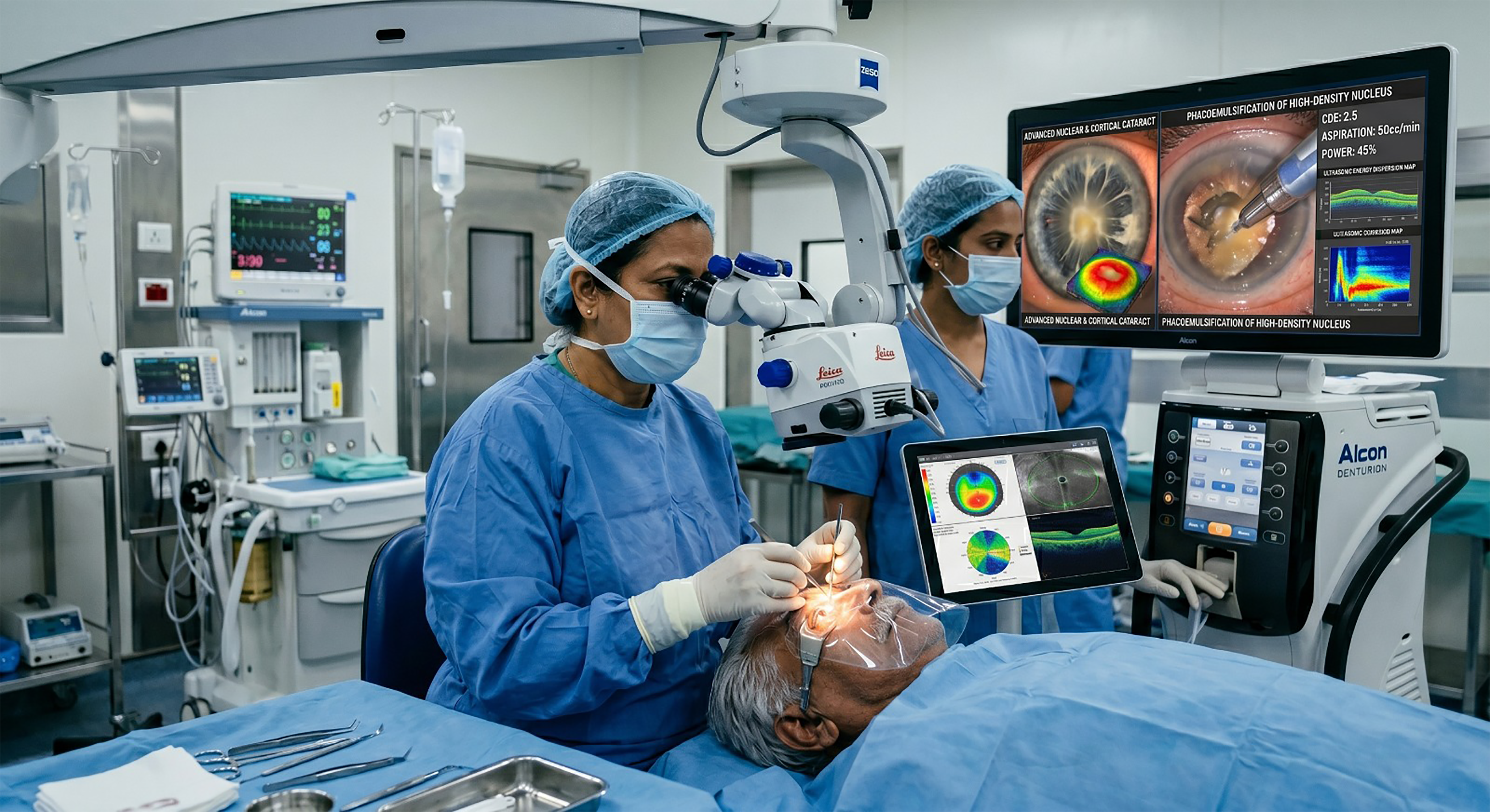
Advanced cataract surgery is a modern, safe and precise procedure in which the cloudy natural lens is removed and replaced with a clear artificial intraocular lens (IOL). With phacoemulsification (small-incision) technology and a range of premium lens options, patients can experience improved vision with a faster, more comfortable recovery compared to older surgical methods.
Types of Intraocular Lenses (IOLs)
Several categories of IOLs are available, ranging from standard monofocal lenses (which correct vision clearly at one distance, usually far, with reading glasses needed afterward) to premium multifocal or toric lenses that can reduce dependence on glasses for near, intermediate and distance vision, or correct pre-existing astigmatism. The suitable lens depends on the patient's eye health, lifestyle and expectations, and is discussed in detail during the pre-surgery evaluation.
Benefits of Advanced Cataract Surgery
- Painless and stitchless procedure
- Quick surgery with faster recovery
- Clear and improved vision
- Same-day discharge
- Advanced foldable lens implantation
- Better quality of life after surgery
Who Needs Cataract Surgery?
Patients who have blurred or cloudy vision, frequent change in glasses power, glare or halos while driving at night, faded or yellowish colors, or difficulty in reading may need a cataract evaluation. Surgery is generally recommended once the cataract starts affecting daily activities like reading, driving or recognising faces — not necessarily as soon as a cataract is first detected.
What to Expect on the Day of Surgery
Cataract surgery is typically done under local (topical or numbing-drop) anesthesia, so the patient is awake but does not feel pain. The procedure itself is usually quick, and most patients go home the same day with a protective eye shield and a set of eye drops to start the healing process.
Post Surgery Care
After cataract surgery, patients are usually discharged the same day. Prescribed eye drops, a protective eye shield or glasses, and avoiding rubbing the eye or heavy exertion in the first few days are important for smooth healing. Follow-up visits are scheduled to monitor recovery and confirm the final visual outcome.